
 AePS
AePS Micro ATM
 Money Transfer
 Banking Services
 Payment Solutions
 Mobile Recharge
 Utility Bill Payment
 DTH Recharge
 Cash and EMI Collection
 IRCTC Booking
 Bus Ticket Agent
 Courier Service Point
 Health Insurance
 Hospicash Insurance
 Bike Insurance
 Car Insurance
 PAN Card Agent
 Digital Gold Seller
 Gift Card
 Solar Installation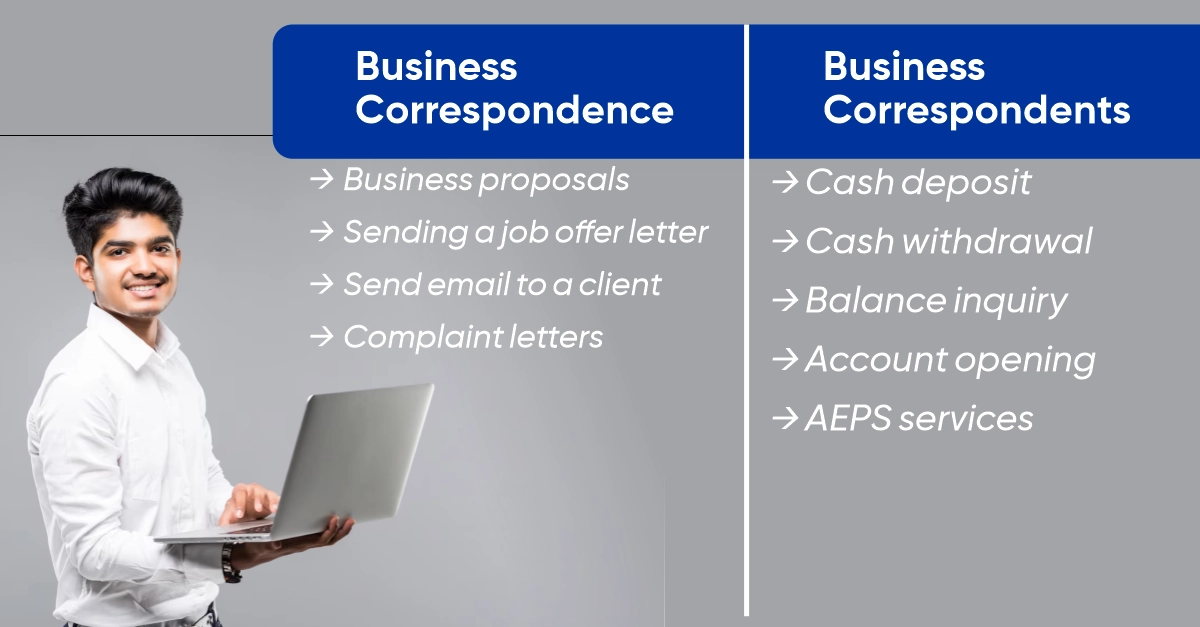
Business communication plays a very important role in the success of any company or organisation. One of the most important parts of communication is business correspondence. Whether it is writing emails, sending letters, or communicating with clients and banks, business correspondence helps maintain professional relationships and smooth operations.
In this detailed guide, we will understand business correspondence meaning, types, importance, and its role in banking, including Business Correspondents (BC) in India.
What is Business Correspondence?
Business correspondence means the exchange of information between two or more parties for business purposes. This communication can be in the form of letters, emails, notices, reports, or messages.
In simple words, Business correspondence is formal communication used in business activities.
For Examples:

- Sending a job offer letter
- Writing an email to a client
- Complaint letters
- Business proposals
It helps in maintaining clarity, professionalism, and proper documentation in business operations.
Business Correspondence Meaning (English & Hindi)
Business Correspondence Meaning in English
Business correspondence refers to written communication between businesses, customers, or employees for official purposes.
It includes both internal communication (within the company) and external communication (with clients, banks, and vendors).
Business Correspondence Meaning in Hindi
व्यावसायिक पत्राचार (Business Correspondence) का मतलब है व्यापार से जुड़े कार्यों के लिए दो या दो से अधिक व्यक्तियों या संस्थाओं के बीच किया गया औपचारिक लिखित संचार।
उदाहरण:
- बैंक को पत्र लिखना
- ग्राहक को ईमेल भेजना
- शिकायत पत्र
Define Business Correspondence
Academic Definition:
Business correspondence is the formal exchange of information in written form for business-related activities.
Practical Definition:
It is a professional way of communication used by companies to interact with customers, employees, and other businesses.
Types of Business Correspondence
Business correspondence is divided into different types based on purpose and usage:
1. Internal Correspondence
- Used for communication within the organisation.
- Helps in coordination between employees and departments.
- Examples: memos, internal emails, notices.
2. External Correspondence
- Communication with people outside the organisation.
- Important for business relationships and transactions.
- Examples: letters to clients, suppliers, and banks.
3. Sales Letters
- Written to promote products or services.
- Aims to attract customers and increase sales.
4. Inquiry Letters
- Used to request information about products or services.
- Helps in decision-making before purchase.
5. Complaint Letters
- Written to report issues or dissatisfaction.
- Helps in resolving problems professionally.
6. Order Letters
- Used to place orders for goods or services.
- Includes details like quantity, price, and delivery terms.
Each type ensures smooth and effective business communication.
Business Correspondence Letter – Format & Example
A proper business letter follows a standard format:
Letter Format:
- Sender’s Address
- Date
- Receiver’s Address
- Subject
- Salutation
- Body
- Closing
- Signature
For Example:
Subject: Inquiry Regarding Business Services
Dear Sir/Madam,
I am writing to inquire about your services related to digital marketing. Kindly provide details regarding pricing and packages.
Thank you.
Sincerely,
[Your Name]
Importance of Business Correspondence
Business correspondence is very important for any organisation.
Key Importance:
- Professional Communication: It maintains a formal and professional tone.
- Builds Strong Relationships: Helps in building trust with clients and partners.
- Proper Record Keeping: Written communication can be used as proof in future.
- Clear Information Sharing: Avoids confusion and misunderstandings.
- Legal Importance: Important for contracts, agreements, and disputes.
Bank Correspondence in Business Communication
In the banking sector, communication plays a very important role.
Uses:
- Account opening communication
- Loan approval letters
- Transaction alerts
- Complaint handling
Banks use emails, SMS, and letters for effective communication with customers.
Business Correspondence in Banking (India)
In banking, business correspondence is used for customer communication and service delivery.
Examples:
- Bank statements
- KYC communication
- Loan notices
- Transaction confirmations
With digital banking, correspondence has become faster through SMS, emails, and apps.
What are Business Correspondents (BC)?
Business Correspondents (BC) are agents appointed by banks to provide banking services in remote areas.
Simple meaning: A Business Correspondent is a person who acts as a mini-bank for customers.
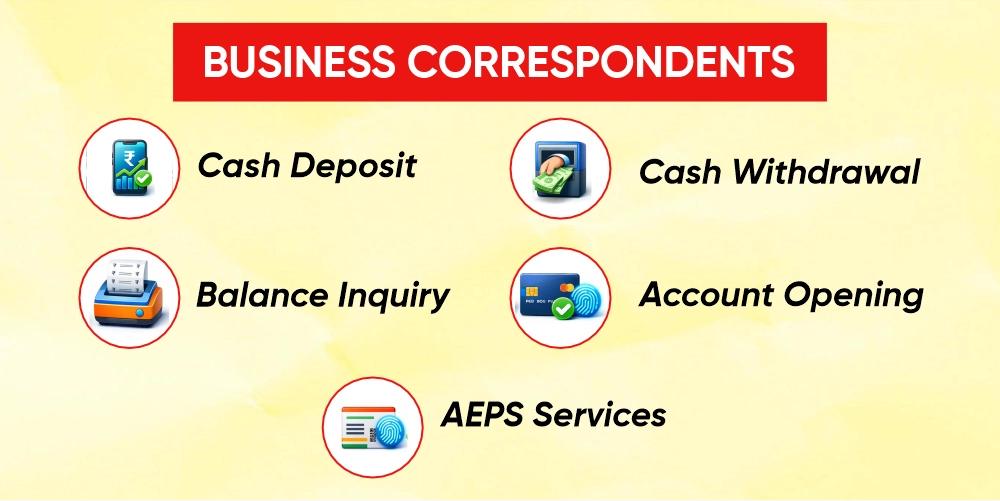
BC Services Provided:
- Cash deposit and withdrawal
- Balance inquiry
- Account opening
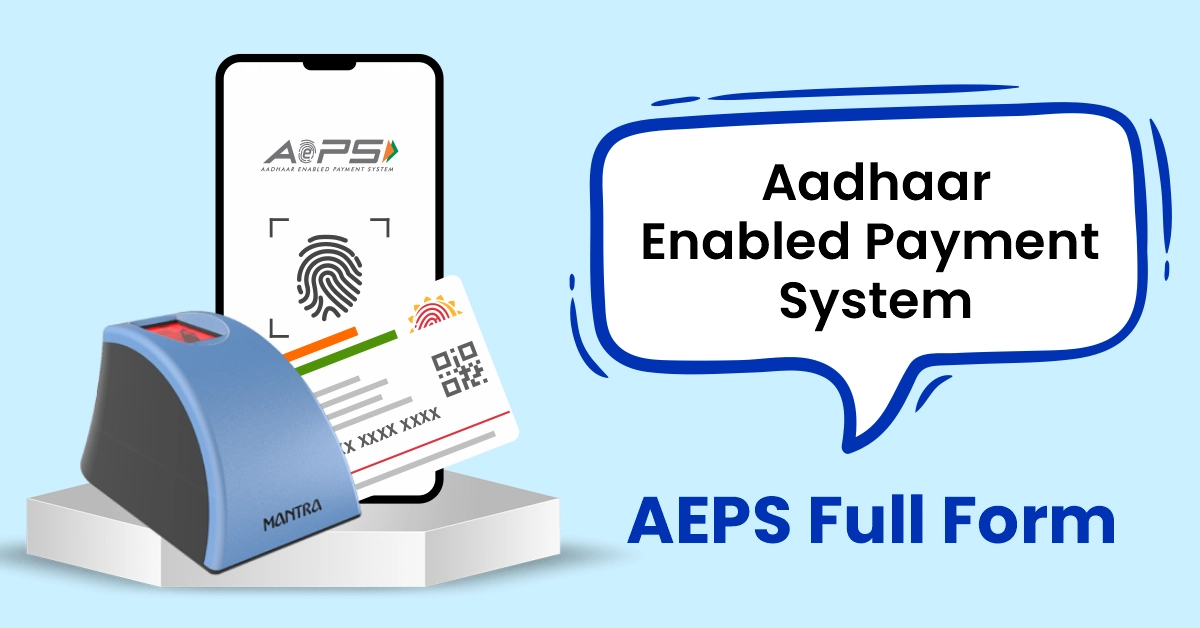
- AEPS services
They help in increasing financial inclusion in rural India.
Also Read: Best Bank to Open a Savings Account Online
Business Correspondent Agent – Role & Work
A Business Correspondent Agent works as a bridge between the bank and customers.
BC Main Roles:
- Provide banking services in villages
- Help customers open bank accounts
- Perform cash transactions
- Assist in government schemes
These agents use devices like:
- Micro ATM
- Biometric scanner
Business Correspondents & Business Facilitators (BC/BF Model)
The BC/BF model is introduced by banks to expand banking services, especially in rural and remote areas.
Business Correspondent (BC)
- BCs are authorised agents of banks.
- They can handle cash transactions like deposits and withdrawals.
- Directly interact with customers using micro ATMs or biometric devices.
- Provide services like AEPS, account opening, and balance inquiry.
Business Facilitator (BF)
- BFs do non-cash activities only.
- They help in spreading awareness about banking services.
- Assist customers with documentation and application processes.
- Do not handle money transactions.
Key Role of BC/BF Model
- Expands banking reach in villages and underserved areas.
- Supports financial inclusion initiatives in India.
- Reduces workload on bank branches.
This model acts as a bridge between banks and rural customers.
RBI Guidelines for Business Correspondents
The Reserve Bank of India (RBI) has set rules for BCs.
Key Guidelines:
- Banks can appoint individuals or entities as BCs
- BCs must follow KYC norms
- Proper training is required
- Banks are responsible for BC actions
Eligible BCs:
- Individuals
- NGOs
- Retail shop owners
- CSC operators
Indian Bank Business Correspondent – Example
Many banks like SBI, Bank of Baroda, and Indian Bank appoint BCs.
For Example:
In rural areas, a BC agent provides:
- Cash withdrawal services
- Account opening
- Government scheme benefits
This helps people who cannot visit bank branches.
Benefits of Business Correspondents in India
Business Correspondents (BCs) play a key role in improving banking access across the country:
1. Financial Inclusion
- Brings banking services to rural and remote areas.
- Helps people open bank accounts and use financial services.
- Supports government schemes like DBT and subsidies.
2. Easy Access to Banking
- Customers don’t need to travel long distances to bank branches.
- Banking services are available at the doorstep or nearby locations.
3. Employment Opportunities
- Creates job opportunities for local individuals.
- Helps small entrepreneurs earn through commissions.
4. Reduces Bank Workload
- Decreases the crowd at bank branches.
- Allows banks to serve more customers efficiently.
Overall, BCs help in making banking simple, accessible, and inclusive for everyone.
Challenges Faced by Business Correspondents
Business Correspondents (BCs) play an important role, but they also face several challenges:
1. Low Commission Income
- Earnings depend on the number of transactions.
- In low-activity areas, income can be very limited.
- This affects the long-term sustainability of BC agents.
2. Network & Connectivity Issues
- Poor internet in rural areas affects transactions.
- Leads to delays and customer dissatisfaction.
3. Cash Handling Risk
- BCs deal with physical cash daily.
- Risk of theft, fraud, or mismanagement is high.
4. Lack of Customer Awareness
- Many people are unaware of BC services.
- Some customers do not trust BC agents initially.
These challenges need proper support, training, and infrastructure to improve BC operations.
Future of Business Correspondence in India
The future of business correspondence is digital and fast.
Trends:
- UPI and AEPS growth
- Mobile banking
- Fintech solutions
- Digital documentation
Business correspondence will become more paperless and efficient.
Difference Between Business Correspondence & Business Correspondents
| Basis | Business Correspondence | Business Correspondents (BCs) |
| Meaning | Refers to formal communication used in business activities | Refers to individuals/agents appointed by banks |
| Nature | It is a process of communication | It is a person or service provider |
| Purpose | To exchange business information professionally | To provide banking services in remote areas |
| Scope | Used in all industries and businesses | Mainly used in the banking sector |
| Examples | Emails, letters, notices, reports | BC agent, micro ATM operator, AEPS service provider |
| Function | Helps in communication and documentation | Helps in financial inclusion and banking access |
| Users | Businesses, companies, employees, clients | Banks, rural customers, financial institutions |
| Area of Work | Office, corporate, and digital communication | Villages, semi-urban, and rural locations |
| Key Focus | Communication and information sharing | Banking services and transactions |
| Simple Definition | Exchange of business messages | Bank representative providing services |
In short: Business correspondence is about communication, while business correspondents are banking agents who provide services.
FAQs on Business Correspondence
What is business correspondence?
It is formal communication used in business activities like emails and letters.
What are the types of business correspondence?
Internal, external, sales, inquiry, complaint, and order letters.
What is a business correspondent in banking?
A person who provides banking services on behalf of a bank.
What is the BC model in banking?
A system where agents provide banking services in remote areas.
What is the salary of a BC agent?
It depends on commission and transactions, usually ₹5,000–₹25,000 per month.
What are RBI rules for BC?
BCs must follow KYC, training, and compliance rules set by RBI.
Conclusion
Business correspondence is an essential part of every business. It ensures smooth communication, builds trust, and maintains proper records. In banking, it plays an even bigger role by connecting customers with financial services.
The introduction of Business Correspondents (BCs) has made banking accessible to every corner of India. With digital growth, business correspondence will continue to evolve and become more efficient.
Also Read: Best AEPS App for Retailers