
 AePS
AePS UPI Cash Withdrawal
 Micro ATM
 Money Transfer
 Banking Services
 Loan
Loan Payment Solutions
 Mobile Recharge
 Utility Bill Payment
 DTH Recharge
 Cash and EMI Collection
 IRCTC Booking
 Bus Ticket Agent
 Courier Service Point
 health insurance
 Hospicash Insurance
 Bike Insurance
 Car Insurance
 PAN Card Agent
 Digital Gold Seller
 Gift Card
 Solar Installation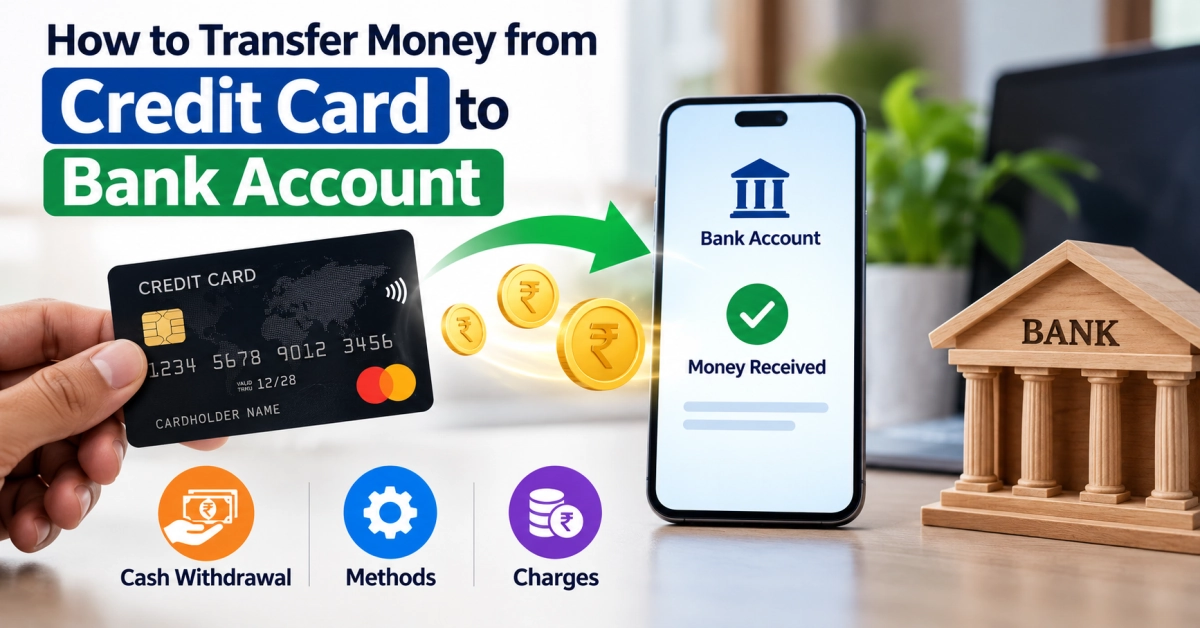
A credit card is mainly used to make purchases, pay bills and complete digital transactions. However, there are situations when a person may need access to cash or funds in their bank account. This often leads to the question: Can you transfer money from a credit card to a bank account?
The answer is: sometimes, depending on the credit card issuer, card type, and available transaction facilities. A normal credit-card payment is different from transferring borrowed funds to a bank account. Similarly, withdrawing cash from a credit card through an ATM is different from making a regular purchase.
Some issuers may offer specific facilities for accessing funds, while others may not allow direct transfers to a bank account. Cash withdrawals can also involve additional fees and interest.
Therefore, before transferring or withdrawing money, it is important to understand the available method, applicable charges, interest rate, credit limit and repayment terms.
In this guide, we explain how to transfer money from a credit card to a bank account, online options, credit card cash withdrawal, ATM withdrawals, charges, repayment and important precautions.
Can You Transfer Money from a Credit Card to a Bank Account?
Yes, in some cases, but it is not a standard feature of every credit card. A credit card provides a borrowing facility up to an approved credit limit. The money available on the card is not the same as money sitting in your savings account.
Whether you can move money from a credit card to a bank account depends on:
- Your credit-card issuer
- Your particular card
- Available credit limit
- Cash withdrawal limit
- Whether the issuer provides an eligible transfer facility
- The service or platform being used
- Applicable terms and charges
For example, having a ₹1 lakh credit limit does not automatically mean that you can transfer ₹1 lakh to your bank account. Some cards may have a separate cash withdrawal limit, which can be lower than the overall credit limit. It is therefore important to check the card issuer’s latest terms before making the transaction.
How Does a Credit Card to Bank Account Transfer Work?
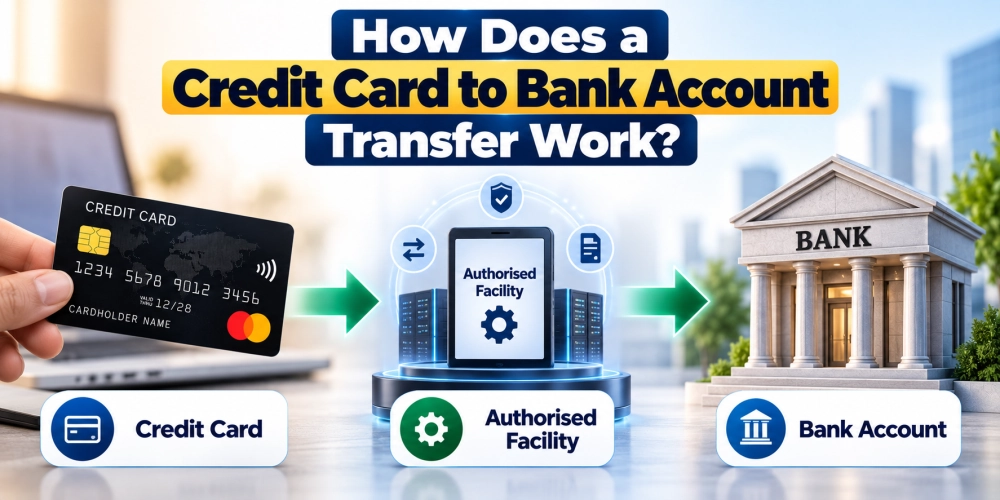
A credit-card-to-bank-account transaction essentially uses your available credit to access funds through an authorised facility.
The general flow may look like this: Credit Card → Authorised Facility → Bank Account
However, this process is not universally available. There are also other ways of accessing funds from a credit card. One common option is a cash advance, where eligible cardholders withdraw cash using their credit card.
The key point is that a cash advance is generally treated differently from an ordinary card purchase.
Before using any facility, check:
- Available credit limit
- Cash withdrawal limit
- Transfer eligibility
- Processing or cash advance fee
- Interest rate
- Applicable taxes
- Repayment terms
How to Transfer Money from Credit Card to Bank Account Online?
If your credit-card issuer provides an eligible facility to access or transfer funds, you may be able to complete the transaction through its official app or internet banking. However, not every credit card allows a direct transfer to a bank account. The process, limits, fees and interest can vary by issuer and card.
Step-by-Step Process
- Open the official banking app or website: Log in to your credit-card issuer’s official mobile app or internet banking using your registered credentials.
- Check your available credit limit: Review your available credit limit and, if applicable, your separate cash withdrawal or cash advance limit. Do not assume your entire credit limit is transferable.
- Check for an eligible transfer facility: Look for an option offered by the issuer for transferring or accessing funds. The name and availability of the facility may differ between cards.
- Enter the required bank details: If bank-account transfer is supported, provide the required account details exactly as instructed by the issuer.
- Review charges and interest: Before confirming, check the applicable processing fee, cash advance fee, interest rate, taxes and other charges.
- Confirm the transaction securely: Complete the required authentication, such as an OTP, through the official banking platform.
- Verify the transaction: Check your bank account for the credit and review your credit-card statement to confirm the amount and applicable charges.
Important Safety Tip: Avoid unknown apps or websites promising instant credit-card-to-bank transfers. Never share your PIN, CVV, OTP or banking password with anyone. Always verify that the transaction is permitted under your card issuer’s current terms.
Is There an App to Transfer Money from Credit Card to Bank Account?
Some payment and financial apps in India may allow users to make credit-card-based payments where the recipient receives money in a bank account. However, these services are generally purpose-specific and should not be treated as a simple way to transfer your credit-card limit into your bank account.
Depending on the app and transaction, services such as PhonePe, PayTm, CRED, PayZapp, CheQ, Tide and MobiKwik may support eligible credit-card payments for purposes such as:
- Rent payments
- Education fees
- Tuition fees
- Utility or other eligible payments
- Other supported merchant or bill-payment categories
How These Transfers Work
- Select the eligible payment category – Choose rent, education, tuition or another supported service.
- Add or select your credit card – Use a supported card according to the platform’s rules.
- Enter the payment details – Provide the required recipient or beneficiary information.
- Review the charges – The app may apply a convenience, processing or platform fee.
- Consider card-issuer charges – Your credit-card issuer may also apply applicable fees, interest or treat certain transactions differently under its terms.
- Complete the payment securely – Use the app’s official authentication process.
Important: Availability, eligible categories, fees and credit-card support can change. Always check the app’s current terms and your card issuer’s charges before making a transaction.
Never share your PIN, CVV or OTP with anyone.
Credit Card to Bank Account Transfer vs Cash Withdrawal
A common source of confusion is treating these two transactions as the same.
| Feature | Credit Card to Bank Transfer | Credit Card Cash Withdrawal |
|---|---|---|
| Where money is received | Bank account, if permitted | Cash |
| Availability | Depends on issuer/service | Depends on card’s cash facility |
| Uses credit limit | Yes | Yes |
| ATM required | Not necessarily | Usually for ATM withdrawal |
| Fees | May apply | Usually applicable |
| Interest | Depends on transaction type | May apply from transaction date |
| Repayment | Credit-card repayment | Credit-card repayment |
| Availability | Not available on every card | Depends on issuer/card |
The exact treatment depends on the card issuer and transaction type. Therefore, always check the current terms before proceeding.
Also Read: Best Bank to Open Savings Account Online
How to Withdraw Cash from a Credit Card?
If you need physical cash, an eligible credit card may provide a cash advance or cash withdrawal facility. This is different from using the card to purchase goods or services. A credit-card cash withdrawal may be available through an ATM, subject to the card issuer’s rules.
Things you may need:
- Eligible credit card
- Available cash withdrawal limit
- Credit-card PIN
- ATM supporting the card/network
- Sufficient available limit
Credit Card Cash Withdrawal Charges
Withdrawing cash using a credit card can be convenient, but it may be more expensive than a regular card purchase. Before making a withdrawal, consider these common charges:
- Cash Withdrawal Fee: A fee of ₹199 + applicable GST may be charged when you withdraw cash using your credit card.
- Interest Rate: Interest can be charged at up to 3.5% per month, depending on the card issuer and card variant.
- When Interest Applies: For cash withdrawals, interest may start from the date of withdrawal, rather than after the usual billing grace period available on eligible purchases.
- Additional Taxes: Applicable GST may be charged on eligible fees and interest.
- Repayment: The longer you take to repay the withdrawal amount, the higher your overall repayment cost may become.
Example: If you withdraw ₹10,000, your repayment can include the ₹10,000 withdrawn amount, ₹199 + GST withdrawal fee, applicable interest and taxes.
Always check your card issuer’s latest fee schedule before withdrawing cash.
How to Withdraw Cash from a Credit Card at an ATM?
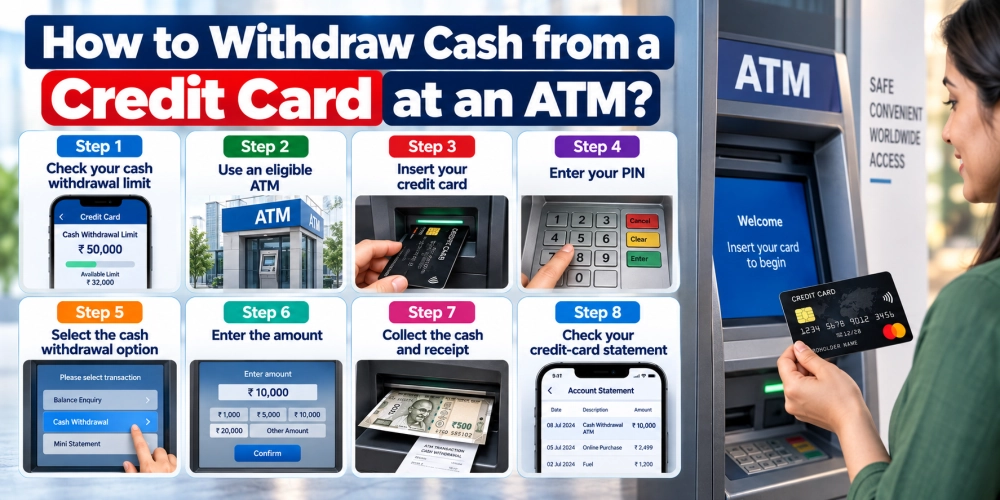
If your credit card supports cash withdrawal, you can withdraw money from an eligible ATM. However, cash withdrawal is generally treated as a cash advance and may attract fees and interest.
Steps to Withdraw Cash
- Check your cash withdrawal limit: Check your card’s available cash limit. It may be lower than your total credit limit.
- Visit an eligible ATM: Use an ATM that accepts your card network and supports credit-card cash withdrawals.
- Insert your credit card: Insert the card and follow the instructions displayed on the ATM screen.
- Enter your PIN: Enter your credit-card PIN securely. Never share your PIN with anyone.
- Select cash withdrawal: Choose the relevant cash withdrawal option and enter the required amount.
- Collect cash and receipt: Take the cash and retain the transaction receipt for your records.
- Check your statement: Review your credit-card statement to confirm the withdrawal amount, cash advance fee, interest and applicable taxes.
Important: Before withdrawing cash, check your card issuer’s latest charges and terms. Cash advances can be more expensive than regular credit-card purchases.
Can You Withdraw Cash from a Credit Card Without a PIN?
Generally, ATM cash withdrawals require appropriate authentication, which commonly includes a PIN. The exact authentication process depends on the card issuer, card network and transaction channel.
If you do not know your PIN, use the official card issuer’s process to retrieve or reset it rather than attempting to bypass the security process. Never share your PIN with anyone.
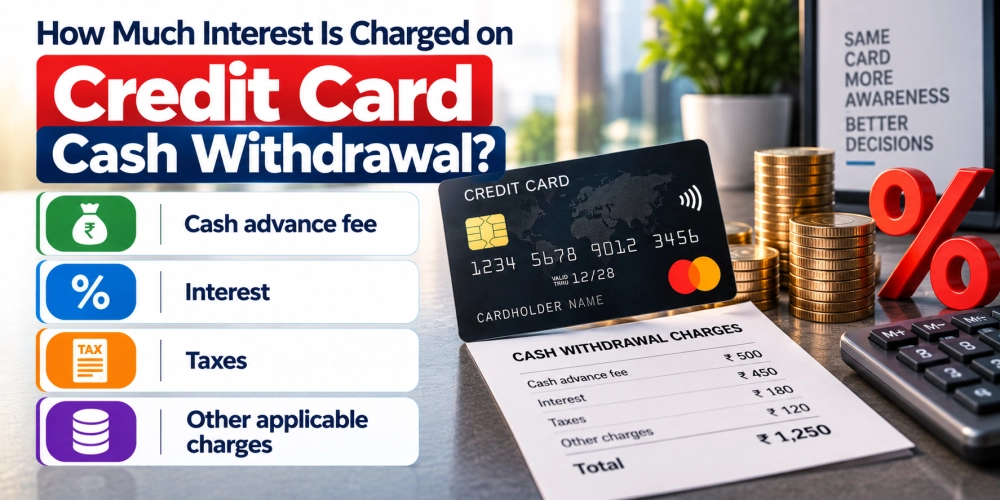
How Much Interest Is Charged on Credit Card Cash Withdrawal?
This is one of the most important things to understand before withdrawing cash. A credit-card cash advance can be significantly more expensive than an ordinary purchase.
The total cost may include:
1. Cash advance fee
The card issuer may charge a fee for withdrawing cash. This can be a fixed amount, a percentage of the withdrawal, or another amount depending on the card’s terms.
2. Interest
Interest may apply to cash withdrawals from the date of the transaction rather than receiving the same type of interest-free period that may apply to eligible purchases. The applicable rate depends on the card issuer and card variant.
3. Taxes
Applicable taxes, such as GST on eligible fees and interest, can increase the total amount payable.
4. Other applicable charges
Depending on the transaction, additional charges may apply. Therefore, don’t look only at the amount you receive. Consider the total repayment amount.
How to Pay Cash Withdrawal from a Credit Card?
Once you withdraw cash using a credit card, the amount becomes part of your credit card outstanding balance. You can generally repay it through the card issuer’s available payment channels.
General repayment process
- Open your credit card app or internet banking.
- Check your outstanding balance.
- Identify the cash withdrawal transaction.
- Check the applicable fee and interest.
- Check your total amount due.
- Make the payment using an official payment method.
- Confirm that the payment has been credited.
It is better to understand the total outstanding amount rather than assuming that repaying only the withdrawn amount will completely settle the transaction.
How to Repay Cash Withdrawal from a Credit Card?
A cash withdrawal should be treated as borrowed money that needs to be repaid. For example, if you withdraw ₹15,000, your repayment obligation may include the withdrawal amount plus applicable fees, interest and taxes. Before making payment, check your statement carefully.
Remember: Cash withdrawn + applicable fees + applicable interest + applicable taxes = amount that may need to be repaid
The actual calculation depends on your card issuer’s terms.
Bank-Specific Credit Card Cash Withdrawal
Many users search for bank-specific information such as “how to withdraw cash from HDFC credit card” or “how to withdraw cash from SBI credit card.”
The basic principle is similar, but the applicable cash withdrawal limit, fees, interest rate and repayment terms can differ. Therefore, bank-specific information should always be checked against the issuer’s latest official terms.
HDFC Credit Card Cash Withdrawal
Users searching for how to withdraw cash from HDFC credit card should first check whether their particular HDFC Bank credit card supports cash withdrawal and what its current cash limit and charges are.
If ATM withdrawal is available, the cardholder generally needs to use an eligible ATM and the required PIN.
Before withdrawing, check:
- Cash withdrawal limit
- Cash advance fee
- Interest rate
- Applicable taxes
- Repayment terms
SBI Credit Card Cash Withdrawal
For SBI credit card cash withdrawal, cardholders should check the latest SBI Card terms for their specific card.
The important points include:
- Available cash limit
- Cash withdrawal charges
- Interest applicable to cash transactions
- Statement treatment
- Repayment requirements
If you have already withdrawn cash, check the SBI Card statement or official account interface to understand the total amount due.
ICICI Credit Card Cash Withdrawal
For ICICI credit cards, check the applicable cash withdrawal facility and current charges for your card.
If you have made a cash withdrawal, review the statement for:
- Withdrawal amount
- Applicable fee
- Interest
- Taxes
- Total outstanding
Axis Bank Credit Card Cash Withdrawal
If you are looking for how to withdraw cash from an Axis Bank credit card, first check your card’s cash withdrawal eligibility and limit.
If the facility is available, follow the issuer’s approved ATM withdrawal process and review the applicable charges before using it.
American Express Credit Card Cash Withdrawal
For how to withdraw cash from an Amex credit card, availability depends on the card and applicable American Express terms.
Cardholders should check their specific card’s cash-access facility, applicable limits, fees and interest before attempting a withdrawal.
Standard Chartered Credit Card Cash Withdrawal
For Standard Chartered credit cards, check the current terms applicable to your card before making a cash withdrawal.
Important factors include:
- Cash withdrawal availability
- Cash limit
- Applicable fee
- Interest
- Repayment requirements
Is Credit Card Cash Withdrawal a Good Idea?
A credit-card cash withdrawal can provide quick access to money, but it should not automatically be considered a low-cost borrowing option.
It may be useful when:
- You have a genuine short-term cash requirement.
- You understand the total cost.
- You have a clear repayment plan.
- Other suitable funding options are unavailable.
It can become expensive when:
- You withdraw cash frequently.
- You delay repayment.
- You focus only on the withdrawal amount.
- You ignore fees and interest.
- You use one credit facility to repay another repeatedly.
The most important question is not simply “Can I withdraw the money?”
It is: “How much will I have to repay, and when can I repay it?”
Alternatives to Credit Card Cash Withdrawal
Before taking cash from a credit card, compare other suitable options.
1. Existing savings
If you already have sufficient funds in your bank account, using available savings may be less expensive than taking a cash advance.
2. Overdraft facility
If your bank provides an overdraft facility, compare its total cost with the credit-card cash withdrawal cost.
3. Personal loan
For a larger requirement, compare the total cost of a personal loan with the cost of using a credit card for cash.
4. Credit-card EMI facility
Some issuers offer EMI or other borrowing facilities. Check the applicable interest, processing fees and terms before choosing this option.
The right choice depends on the amount required, repayment period and total borrowing cost.
Common Mistakes to Avoid When Transferring Money from a Credit Card
Before transferring money or withdrawing cash using a credit card, avoid these common mistakes:
- Assuming the full credit limit is available: Your total credit limit and cash withdrawal limit can be different. Always check the available cash limit first.
- Ignoring fees and interest: Credit-card cash withdrawals or certain payment services may include processing fees, interest and applicable GST. Check the complete cost before proceeding.
- Treating cash withdrawal like a normal purchase: Cash advances can have different charges and interest rules. Interest may start from the date of withdrawal.
- Using unverified apps: Use only trusted and authorised payment platforms. Avoid apps promising instant transfers without clearly explaining their charges and terms.
- Sharing PIN, CVV or OTP: Never share confidential card or banking credentials with anyone, even if they claim to represent a bank or payment company.
- Delaying repayment: Prompt repayment can help reduce the interest cost. Always check your statement and pay the applicable outstanding amount on time.
FAQ: Transferring money or withdrawing cash using a credit card
Can I transfer money from a credit card to a bank account?
In some cases, an issuer or authorised service may provide a facility to access credit-card funds through an eligible transfer. However, direct transfers are not available on every card. Check your card issuer’s current terms.
How can I transfer money from a credit card to a bank account online?
If your issuer provides an eligible online facility, you may be able to use its official mobile app or internet banking platform. Check eligibility, fees, limits and interest before confirming the transaction.
Can we transfer money from a credit card to a bank account?
It depends on the card issuer and the facility available on your particular card. A credit limit does not automatically mean that the amount can be transferred directly to a bank account.
Is there an app to transfer money from a credit card to a bank account?
Some financial platforms may offer specific services, but not every app supports this type of transaction. Use only legitimate and authorised platforms and check their fees and terms.
How do I withdraw cash from a credit card?
If your credit card supports cash withdrawal, you may be able to withdraw cash through an eligible ATM using your card and required authentication, subject to your cash withdrawal limit.
Can I withdraw cash from a credit card at an ATM?
Yes, eligible credit cards may allow ATM cash withdrawals. However, cash advance fees and interest may apply.
Can I withdraw cash from a credit card without a PIN?
ATM cash withdrawals generally require appropriate authentication, commonly a PIN. Do not attempt to bypass the card’s security requirements.
How much interest is charged on credit-card cash withdrawal?
The applicable interest rate varies by issuer and card. Cash withdrawals may start accruing interest from the transaction date, so check your card’s current terms before withdrawing.
How do I repay a credit-card cash withdrawal?
Check your credit-card statement or official app for the withdrawal, fees, interest and total outstanding amount. Then make the payment through an official payment channel.
Is credit-card cash withdrawal the same as a normal purchase?
No. Cash withdrawal is generally treated differently from a normal card purchase and may have separate fees, interest rates and repayment rules.
Does withdrawing cash from a credit card use my credit limit?
Yes. A cash withdrawal generally uses part of the available credit, subject to the card’s specific cash withdrawal limit.
Key Takeaways
If you are searching for how to transfer money from a credit card to a bank account, remember these points:
- A credit card and bank account serve different purposes.
- Direct credit-card-to-bank-account transfers are not available on every card.
- Your total credit limit may be different from your cash withdrawal limit.
- Credit card cash withdrawal is different from a regular card purchase.
- Cash advances can involve fees, interest and applicable taxes.
- Interest may start from the date of cash withdrawal, depending on the issuer’s terms.
- Always check the latest charges before withdrawing or transferring money.
- Use official banking channels and legitimate services.
- Never share your PIN, CVV or OTP.
- Have a repayment plan before using borrowed credit.
In short, transferring or withdrawing money from a credit card can be possible in certain situations, but it should be treated as borrowing rather than free access to cash. Understanding the applicable fees, interest, limits and repayment terms can help you make a more informed financial decision.
Also Read: UPI Cash Withdrawal: How to Withdraw Cash Using UPI at ATM Without a Debit Card